
Ski & snow shipping guide
How to pack skis or a snowboard for shipping
Skis and snowboards aren't exactly delicate, but that doesn't mean they can handle a cross-country trip without the right prep. Here's how to pack your gear so it arrives ready to shred, not ready for repair.
Sharp edges, exposed bindings, and unsecured boards are a recipe for scratches, pressure damage, and gear that arrives worse than when it left. Packing correctly is the difference between pulling your equipment out ready to shred and spending your first morning at the resort doing damage control.
This guide walks through exactly how to pack skis or a snowboard for shipping, step by step, so your gear arrives in the same condition it left.
Step zero
What you need to pack: skis or a snowboard
Before you start, gather everything in one place. Scrambling for supplies mid-pack usually ends with something missing or underprepared.
- Ski or snowboard bag (padded preferred, more on that below)
- Bubble wrap or foam padding material
- Packing tape
- Edge guards or edge protectors (optional, but worth it)
- Soft items: clothing, towels, or fleece layers for internal cushioning
- Your shipping label, printed and ready to attach
A padded ski or snowboard bag is the ideal starting point. The internal cushioning does a lot of the heavy lifting before you add anything else.
The process
Step-by-step: how to pack skis or a snowboard for shipping
Packing ski or snowboard gear for shipping isn't complicated, it just requires a few deliberate steps. Work through these in order and you'll have your bag ready without second-guessing it.
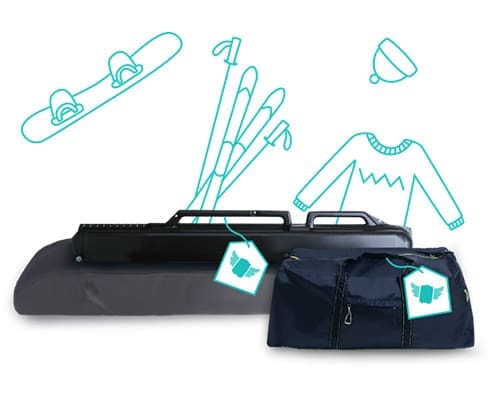
Clean and dry your equipment
Start here. Skis and snowboards picked up moisture from snow, ice, and wet storage should be wiped down and given time to dry completely before they go into a bag. Shipping wet or damp equipment can cause moisture damage, rust on edges, delamination on the board, or mildew on any soft items packed inside. A dry base layer protects everything else.
Secure bindings and loose parts
Bindings that move around in transit are a liability. Tighten all binding screws to make sure nothing shifts during handling. If your bindings have adjustable components, lock them in. Remove or secure any detachable parts, brake levers, straps, or accessories that could catch on other gear and cause damage. The goal is a package where nothing moves that shouldn't.
Protect edges and surfaces
Ski edges are sharp. That's the point on the mountain, but during shipping, those edges will work against you if they're left exposed. Wrap edges with edge guards, foam pipe insulation, or a few layers of bubble wrap secured with tape. Pay extra attention to tips and tails, which are the most vulnerable points during handling. For snowboards, wrap the edges along the full perimeter and add reinforcement at the nose and tail.
Add cushioning inside the bag
Once your gear is protected, fill any empty space. Gaps inside the bag allow equipment to shift, and shifting is how damage happens. Pack clothing, towels, or any soft items you're bringing along into the empty areas around and between your skis or board. Distribute the fill material evenly so nothing is sitting lopsided inside the bag. Think of it like packing a cooler. Full and snug is better than rattling around.
Pack boots and accessories (if included)
Boots can travel in the same bag if there's room, but position them carefully. Place boots toward the middle or lower end of the bag, where their weight is balanced and not pressing directly on ski tips or board edges. Heavier items at one end create pressure points that can cause surface damage over a long transit. Helmets, goggles, or other accessories should be wrapped and nestled into soft fill rather than dropped loose on top.
Seal and label the bag
Close all zippers fully and check that they're not straining against overpacked contents. If the bag has external compression straps, use them. For bags with zippers that could work open in transit, a strip of packing tape over the zipper pull adds peace of mind, just make sure it doesn't damage the zipper itself. Attach your shipping label in a visible, flat area and cover it with a strip of clear tape so it stays readable throughout the journey. Double-check the label before it leaves your hands.
Pro tips
Packing tips to prevent damage during shipping
The steps get your gear packed. These tips get it there in one piece.
Don't overpack
A bag straining at the seams puts pressure on your gear from the outside in. If it won't close comfortably, something needs to come out.
Distribute weight evenly
Heavy items concentrated at one end create leverage points during handling. Spread weight as evenly as possible along the length of the bag.
Double up on tips, tails, and bindings
These are the spots most likely to take impact during transit. If you're going to reinforce padding anywhere, do it here.
Check every closure
Zippers, buckles, straps. Go through them all before the bag leaves your hands. An open zipper is an open invitation for damage.
Use a bag built for the job
A padded ski or snowboard bag designed for travel is the best single investment you can make for gear protection. It does more work than any amount of improvised padding.
Avoid these
Common mistakes to avoid when packing skis or snowboards
Most shipping damage isn't bad luck. It's avoidable. Here are the mistakes that cause the most problems:
Skipping edge protection
Bare edges can cut through padding, damage other gear in the bag, and take their own hits during transit. Edge guards exist for a reason, so don't leave home without them.
Leaving items loose inside the bag
A snowboard with six inches of empty space on either side is going to move. Movement equals potential damage. Fill gaps before you seal the bag.
Overloading with heavy gear
Boots, helmets, and extra layers add up fast. Overweight bags are harder to handle and more likely to be dropped or mishandled. Know your weight limits before you pack.
Shipping wet equipment
Moisture trapped in a sealed bag has nowhere to go. It can rust metal edges, cause delamination, and ruin any soft items inside. Dry everything completely first.
Not securing bindings
Loose bindings shift in transit and can scratch surfaces, stress attachment points, or catch on other items inside the bag. Tighten before you pack.
Good to know
Should you pack skis or a snowboard differently for air travel vs. shipping?
Yes, and it matters more than most people expect.
✈ Airline check-in
Baggage handling is fast and volume-driven. Bags move through conveyor systems, get loaded and unloaded quickly, and may be stacked under other luggage. Airline bags are often built for mobility: wheels, external handles, lightweight construction.
📦 Shipping transit
Your gear moves through a carrier network and may spend extended time in a warehouse or delivery vehicle. Mobility matters less. Internal protection matters more. You're optimizing for stillness and structural stability, not rolling through a terminal.
When packing for shipping, focus on filling internal space completely so nothing shifts, protecting sharp edges and fragile areas thoroughly, and making sure closures are secure enough for multiple handling points. The bag doesn't need to roll smoothly. It needs to survive the journey without moving around inside.
Both methods still require proper protection, but packing for shipping is less about convenience and more about containment.
Worth considering
When to ship skis or snowboards instead of checking them
Checking ski or snowboard gear with an airline works for some trips. But there are situations where shipping ahead makes more sense.
Oversized baggage fees for ski gear can be steep, and they apply each direction. If you're flying on a carrier that treats ski bags as oversized or charges a premium for sports equipment, the math can shift quickly in favor of shipping. Traveling with multiple bags (skis, boots, apparel, and carry-on) also means more to wrangle at the airport, more to check, and more to wait for at baggage claim.
If you want to move through airports without your equipment, shipping lets you do that. Your gear travels separately and meets you at your destination, whether that's a hotel, resort, or rental property. For ski trips where the resort is the final destination, sending gear directly ahead can mean less handling, less stress, and no oversize baggage counters.
It's not the right call for every trip, but for the ones where logistics are already complicated, it's worth comparing.
Keep reading
Related guides for shipping sports equipment
If you're ready to move past packing and into the shipping side of things, these pages walk through the full process.
Questions
Frequently asked questions about packing skis or snowboards
Can you ship skis without a ski bag?
It's possible, but not recommended. Without a dedicated ski bag, you'd need to use a hard case or construct your own protective packaging. That means wrapping skis thoroughly in foam or padding, securing edges, and boxing them in a way that prevents movement. A proper ski bag is the simplest and most reliable solution. It's designed for exactly this purpose and makes the process much easier.
Do I need a padded bag to ship a snowboard?
A padded bag isn't strictly required, but it provides a meaningful layer of protection that you'd otherwise need to recreate with padding materials. If you're using a non-padded bag or a hard case, you'll need to be more thorough about wrapping the board, protecting edges, and filling internal space. A padded bag does most of that work for you and is worth the investment if you ship gear regularly.
Can I pack boots in the same bag as skis?
Yes, in most cases, but position matters. Place boots toward the center or lower end of the bag with weight balanced, and make sure they're not pressing against ski tips or creating pressure points on the board. Wrap boots separately if they have sharp buckles or hardware, and fill any gaps between boots and skis with soft padding to prevent movement during transit.
How heavy can a ski bag be for shipping?
Weight limits vary by carrier and service level, so it's worth checking before you pack. In general, most ski bags fall within standard shipping weight ranges, but adding boots, helmets, and extra gear can push a bag heavier than expected. Weigh your packed bag before booking if you're unsure. Overweight packages may carry additional fees or require a different service.
Is it safe to ship skis or snowboards?
Yes. Skis and snowboards ship regularly through major carriers and arrive without issue when packed correctly. The key variables are proper edge protection, secure bindings, full internal cushioning, and a sealed, labeled bag. Gear that's packed the right way is well-protected throughout the carrier network. Gear that isn't is where problems start, which is why this guide exists.
More time on the slopes, less time waiting for your skis.
Skip the oversize counter. Ship your gear door-to-door with LugLess and show up ready to ride.